The same sequence every time, whichever of the eight above brought us out.
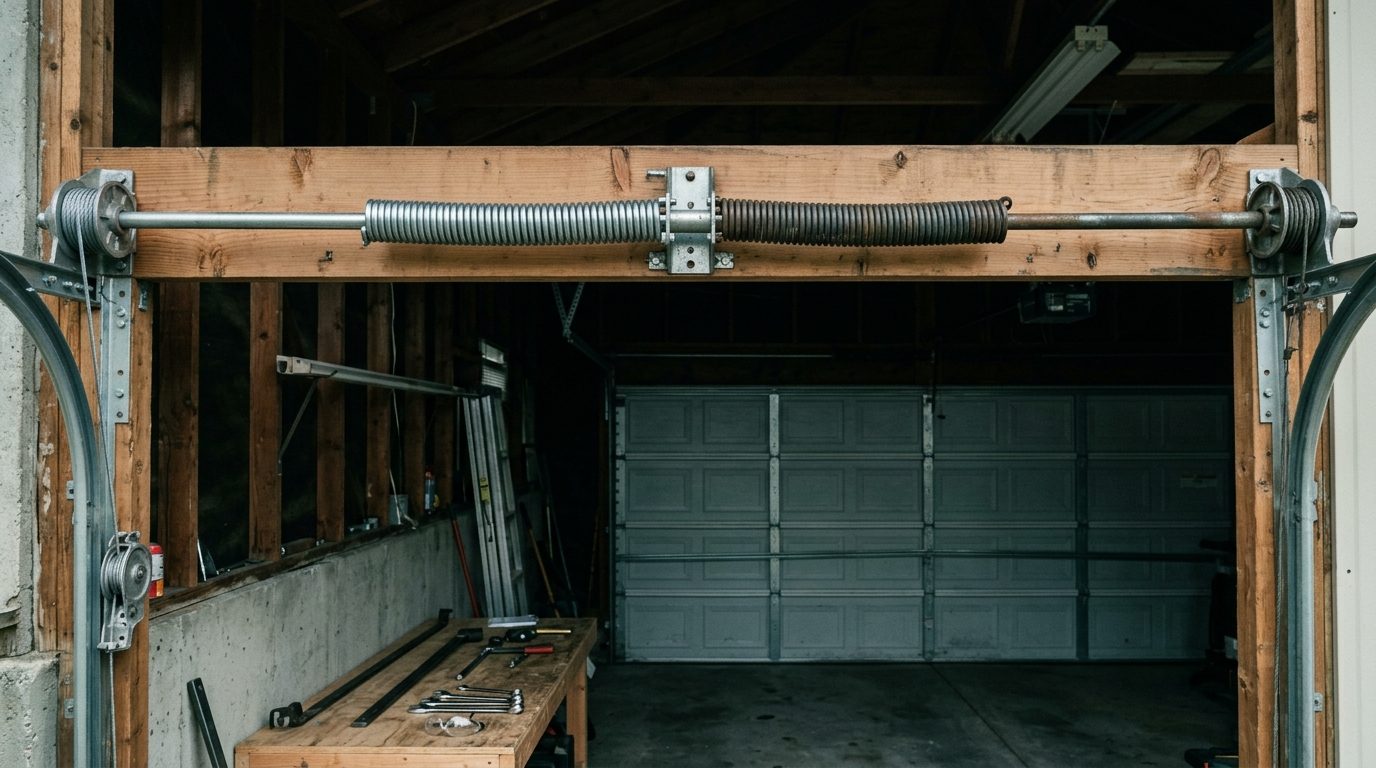
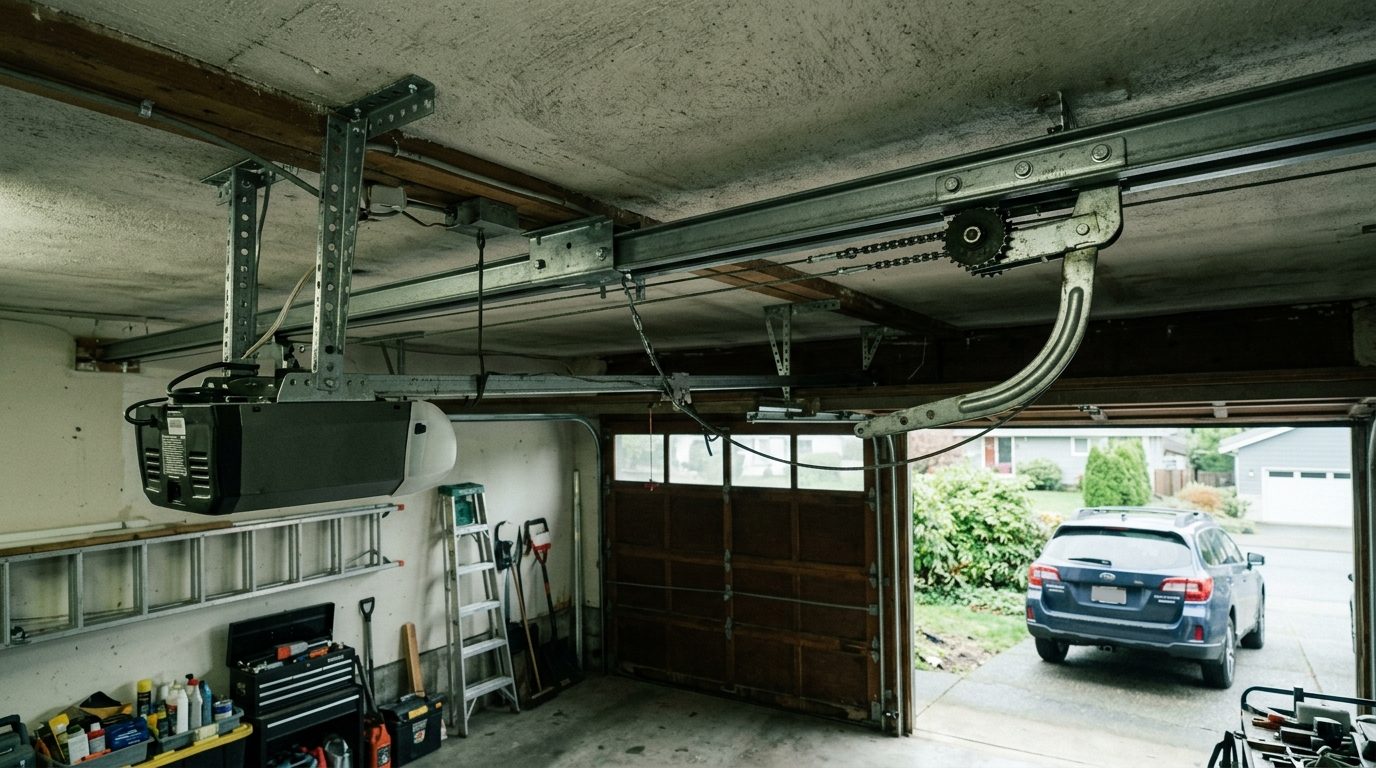
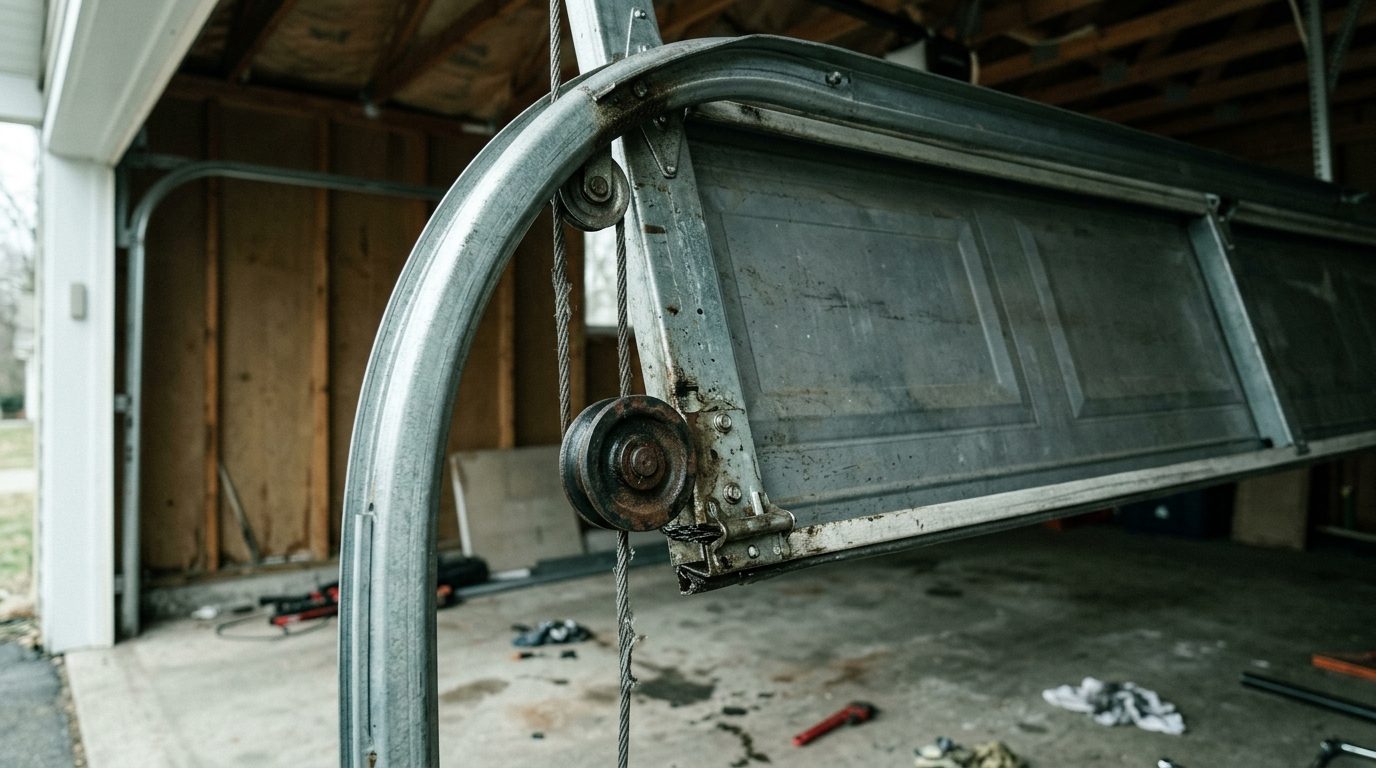
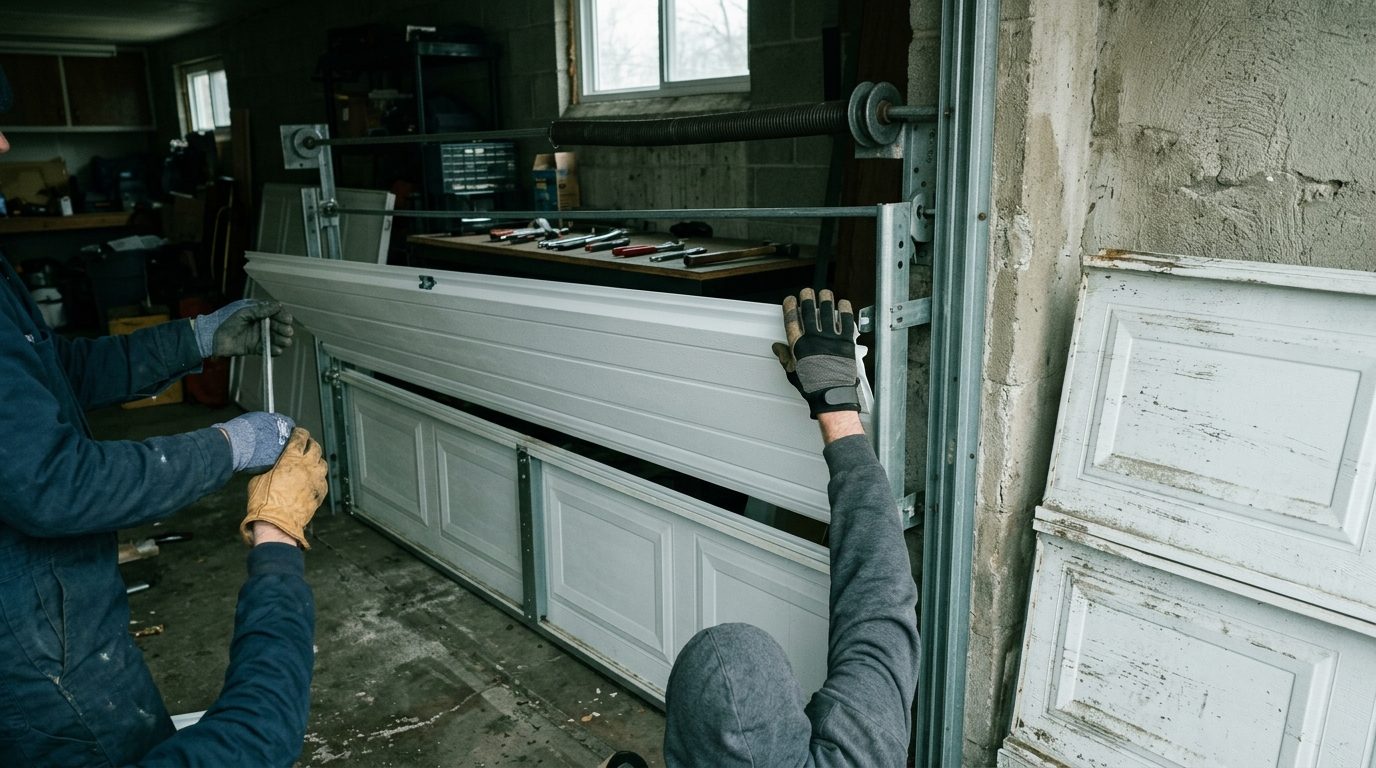
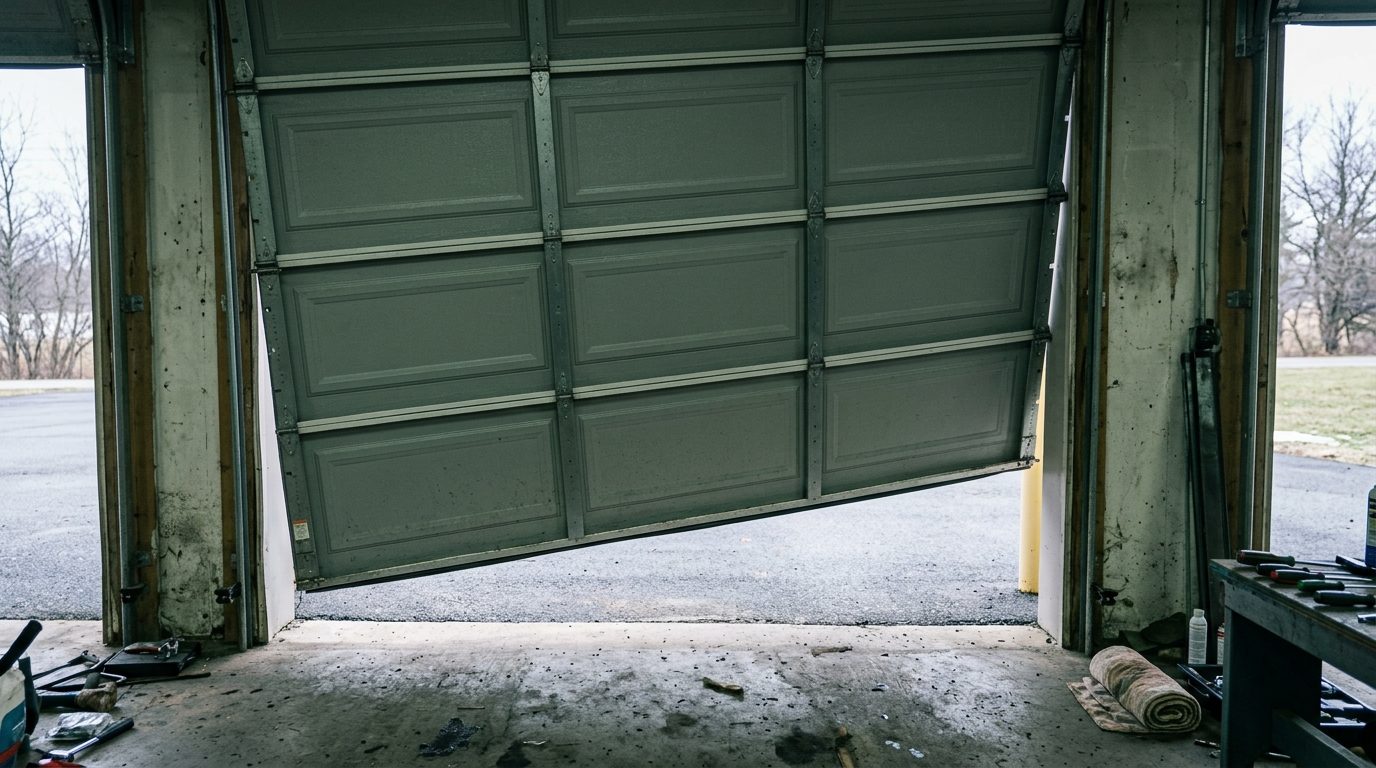
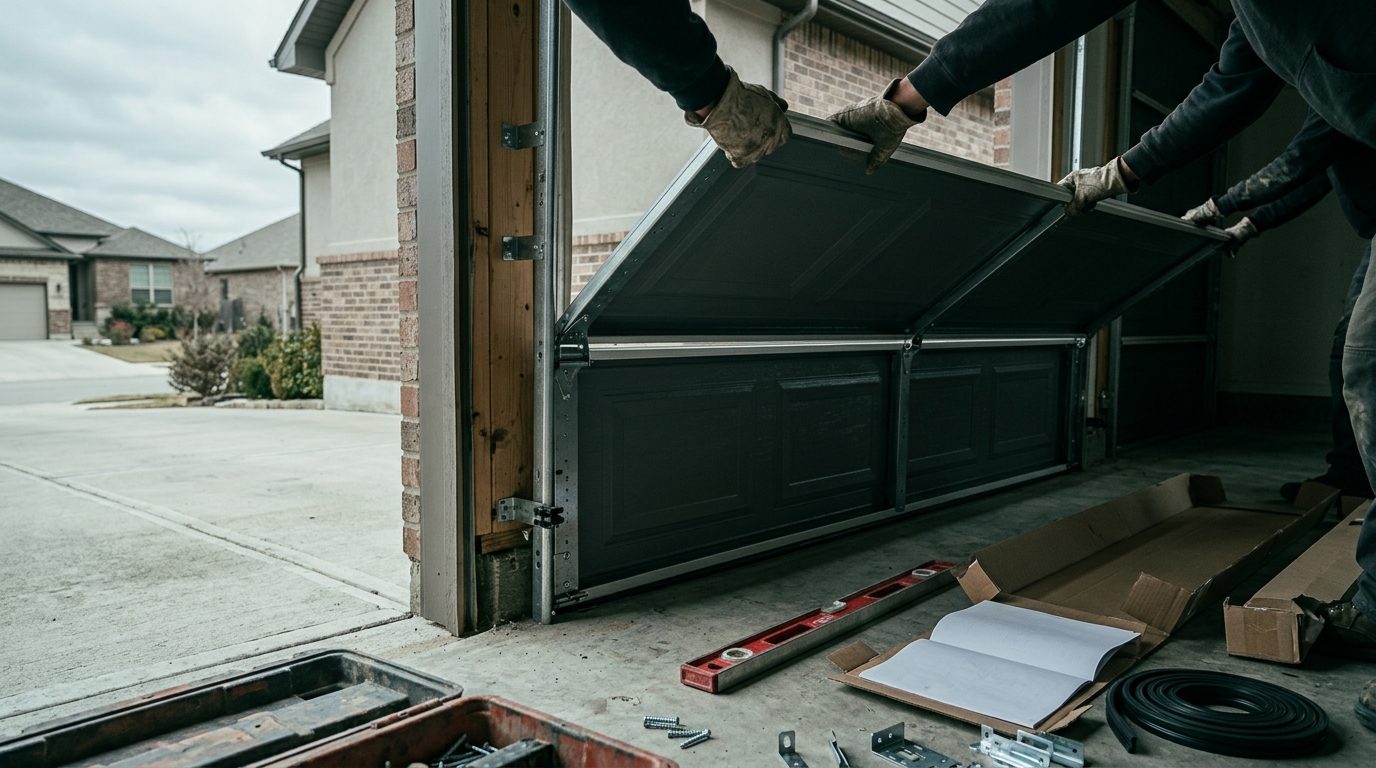
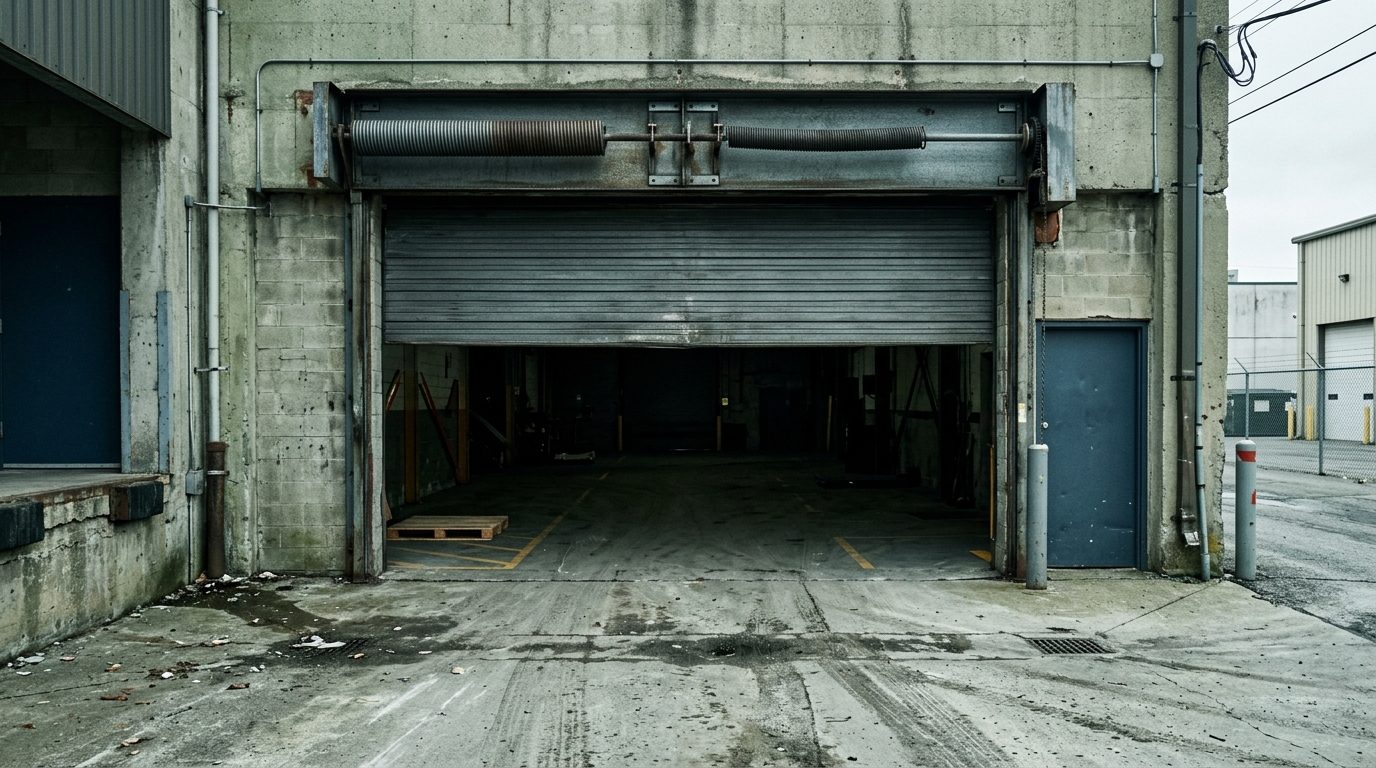
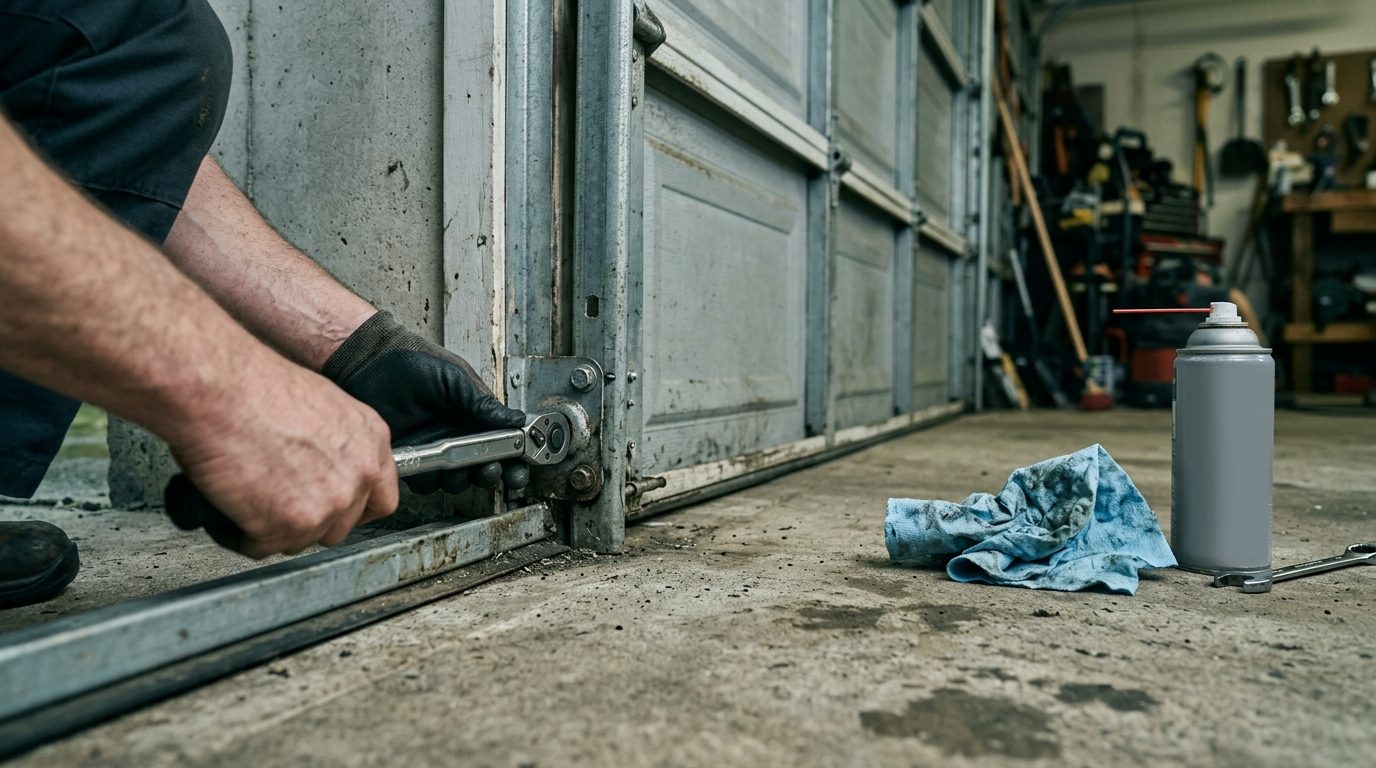
It starts with the door disconnected from the opener and moved by hand. That one step tells us more than anything else: a balanced door stops and holds wherever you leave it, and a door that slams down or flies up is telling you the springs are wrong before a single part is removed. From there we work through the counterbalance - spring condition and wind, cable seating on both drums, drum alignment - then the guidance, meaning rollers, hinges, and whether the track is plumb and square where it meets its brackets. The opener is checked last, because on a door with a balance problem the opener is a symptom rather than a cause, and replacing it first is how people end up buying three of them.
Then you get the findings before the work starts: what failed, what caused it, what has to be handled now, and what can wait. That middle item is the one most estimates skip. A cable does not fray on its own, it frays against something, and if the something is still there the new cable will do exactly what the old one did. Where a cause can be corrected in the same visit we correct it, and where it needs a part we do not carry, you are told that rather than being given a repair that we already know is temporary.
Work finishes with the door cycled several times under its own opener while you watch, the balance re-tested by hand, and the safety reversal confirmed on contact with the floor and through the photo eyes. You get shown what changed and what to watch for. Anything we removed leaves with us.
Two things worth knowing about how we price this, neither of which involves a number on a web page. The first is that the estimate comes after the inspection rather than before it, because a figure quoted down the phone is a guess dressed up as a commitment, and it only ever moves in one direction once somebody is standing in front of the door. The second is that the estimate separates what is needed now from what is merely worn, so you are deciding rather than being told. If you want only the necessary work done, that is a normal thing to ask for and it will not change how the job is handled.
Finally, the part most people ask about after the fact: what makes a repair come back. In our experience it is almost always one of three things - a spring matched to the wrong weight, a cause left in place while its symptom was replaced, or an opener asked to do the work the springs should have been doing. All three are avoidable on the first visit, and all three are why we measure the door before we quote it rather than after.